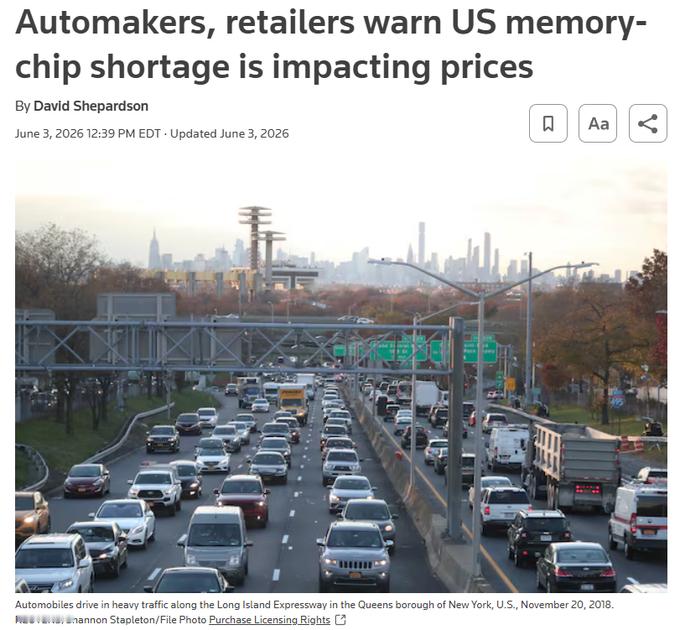
微芯片和存储芯片是消费品价格的主要因素。从手机到冰箱、汽车到家用电器,现在所有这些产品内部都装有这些芯片。
不幸的是,这些芯片在人工智能(AI)中也必不可少。人工智能热潮正在引发芯片短缺,这对许多其他产品产生了影响。
例如,Micro 通过《芯片法案》获得了补贴。他们拿到了纳税人的钱,然后决定转而专注于人工智能芯片,从而牺牲了其他消费品的生产能力,导致这些领域出现短缺。
我们可以看到这种影响渗透到消费品通胀数据中。Micron 接受旨在增加美国消费品芯片产能的补贴,然后让首席执行官 Sanjay Mehrora 将重点转向人工智能市场,这公平吗?
如果像 Micro 这样的公司要接受《芯片法案》的资金,就应该将其用于预期的目的。
Microchips and memory chips are a major factor in consumer prices. Everything from phones to refrigerators to cars to home appliances now have these chips inside of them.
Unfortunately, these chips are also needed in Ai. The Ai boom is causing a chip shortage that is having an impact on many other products.
For example, Micro was a recipient of subsidies via the CHIPS act. They received the taxpayer cash, then they decided to focus on Ai chips instead and sacrificed capacity for other consumer goods, creating a shortage in those sectors.
We can see this trickling into the inflation stats for consumer goods. Is it right for Micron to take subsidies, meant to increase chip capacity for American consumer goods, then have the CEO Sanjay Mehrora shift his focus instead to the Ai market?
If a company like Micro is going to accept the money from the CHIPS act, it should have been used for the intended purpose.