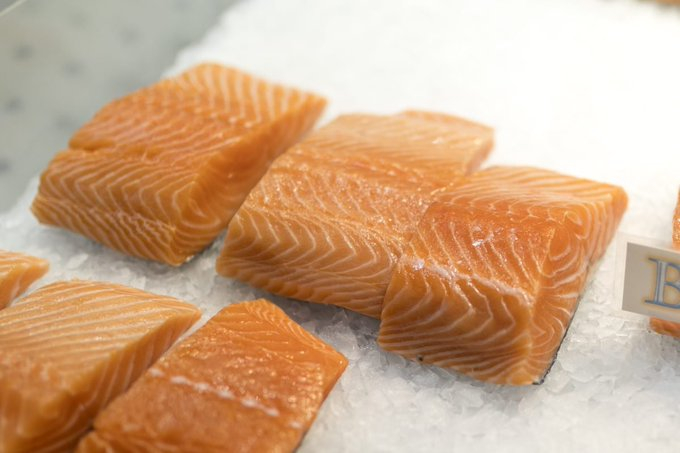
养殖鲑鱼的鱼肉并非橙色。
野生鲑鱼的颜色来自虾青素,这是一种抗氧化剂,它通过食用磷虾和小型甲壳类动物等海洋食物链中的生物获得。
养殖鲑鱼生活在网箱中,不吃磷虾,而是吃一种不含有效虾青素的谷物和鱼粉混合颗粒饲料。
因此,肉质呈灰色。
养殖场会在饲料中添加合成虾青素。业内有一个名为 SalmoFan 的颜色图表,包含十六种编号的橙色色调。养殖场会选择他们想要的鲑鱼颜色,并将该色调编号写入饲料配方。这样,鲑鱼肉就能达到预期的颜色。
你吃的这条鱼是根据色卡上的颜色匹配的。
脂肪成分同样取决于其饲料,这意味着养殖鲑鱼的 omega-3 含量远低于野生鲑鱼,而 omega-6 含量则远高于野生鲑鱼,因为饲料中含有谷物和大豆。
在很多情况下,你花的是野生鲑鱼的价格,却买到的是谷物喂养、染色、网箱养殖的鱼。
标签上写的是鲑鱼。
从技术角度来说,这个标签是准确的。
Farmed salmon does not have orange flesh.
Wild salmon builds its colour from astaxanthin, an antioxidant it gets from eating krill and small crustaceans in a functioning marine food chain.
Farmed salmon lives in a net pen. It does not eat krill. It eats a grain-and-fishmeal pellet that does not contain meaningful astaxanthin.
The flesh is therefore grey.
The farms add synthetic astaxanthin to the feed. There is an industry colour chart called SalmoFan. It has sixteen shades, numbered. The farms pick which shade of orange they'd like their salmon to be. The number goes into the feed specification. The flesh arrives at the correct colour.
The fish you're eating was colour-matched from a swatch card.
The fat profile is similarly a product of what it was fed, which means a farmed salmon's omega-3 content is substantially lower than a wild one's, and its omega-6 is substantially higher, because the feed contains grain and soy.
You are paying wild salmon prices, in many cases, for a grain-fed, dyed, net-pen fish.
The label says salmon.
The label is technically accurate.