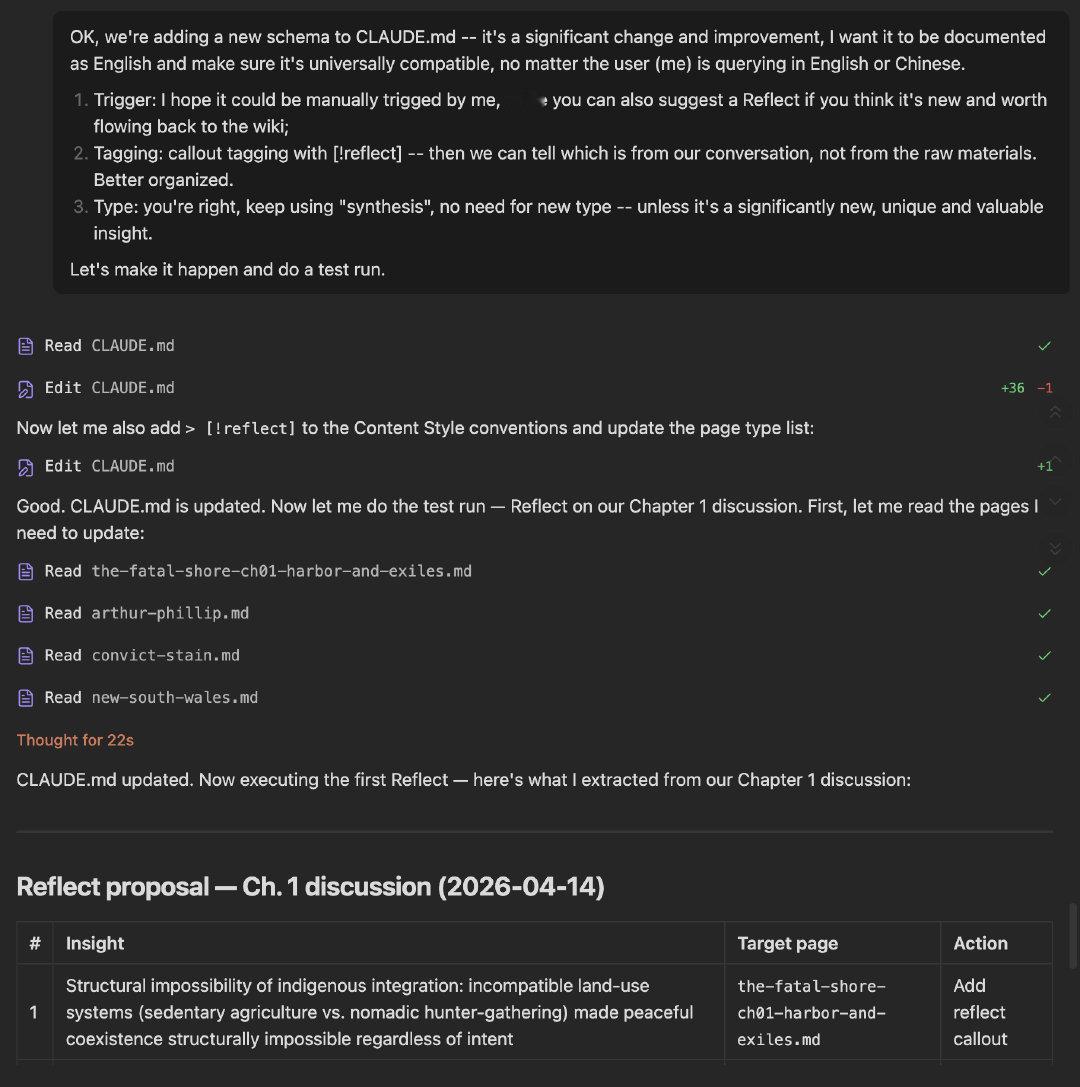
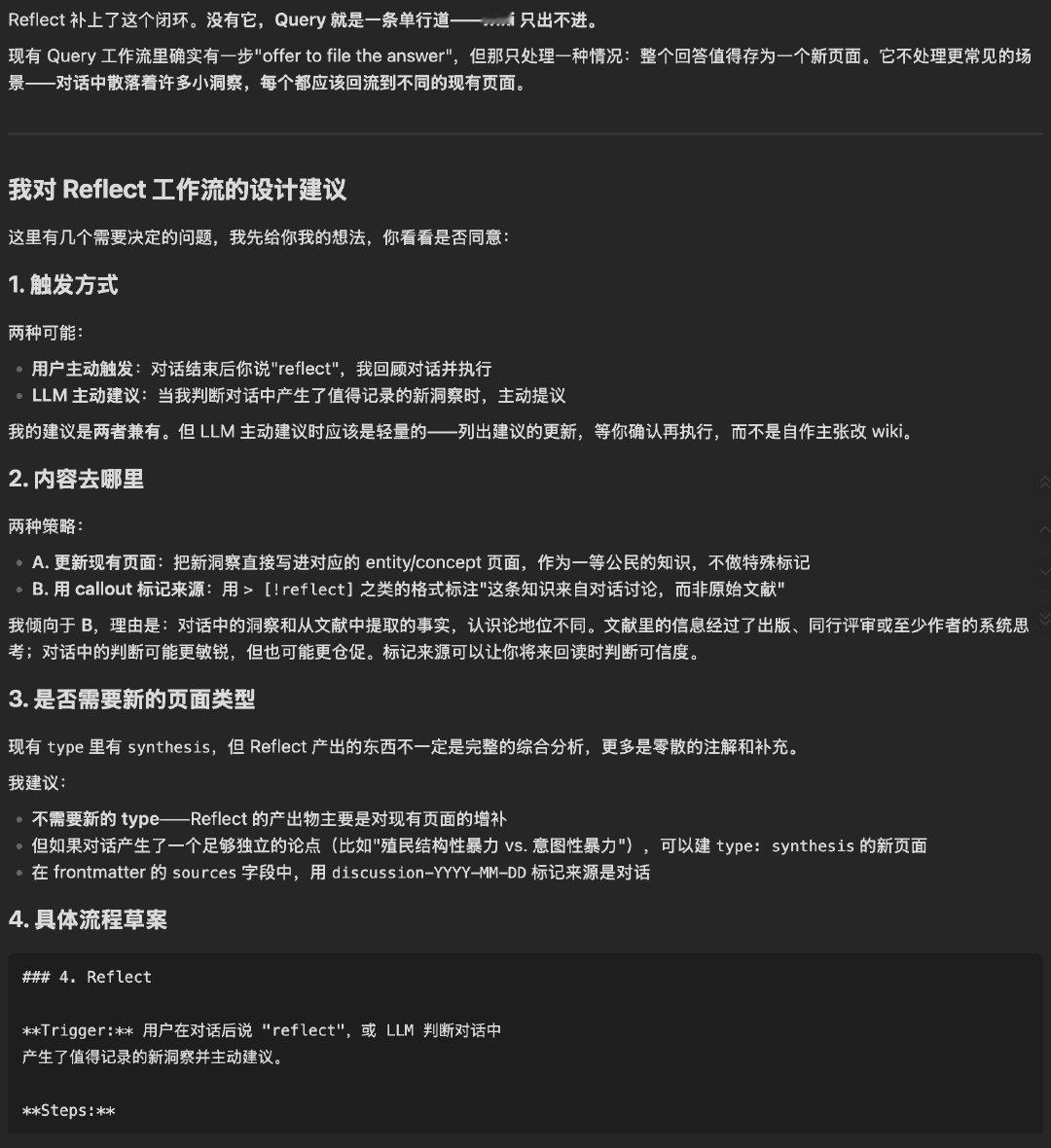
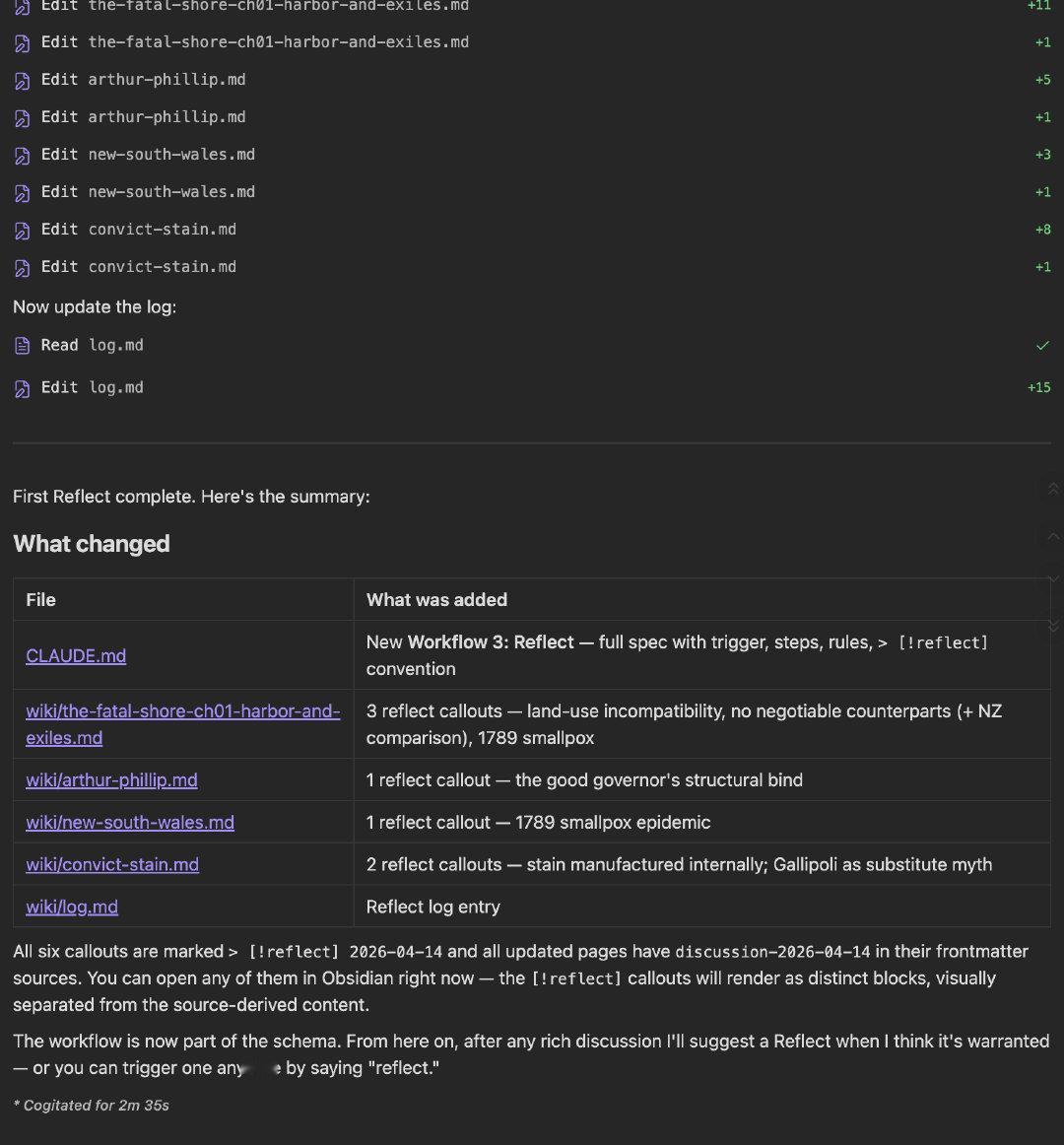
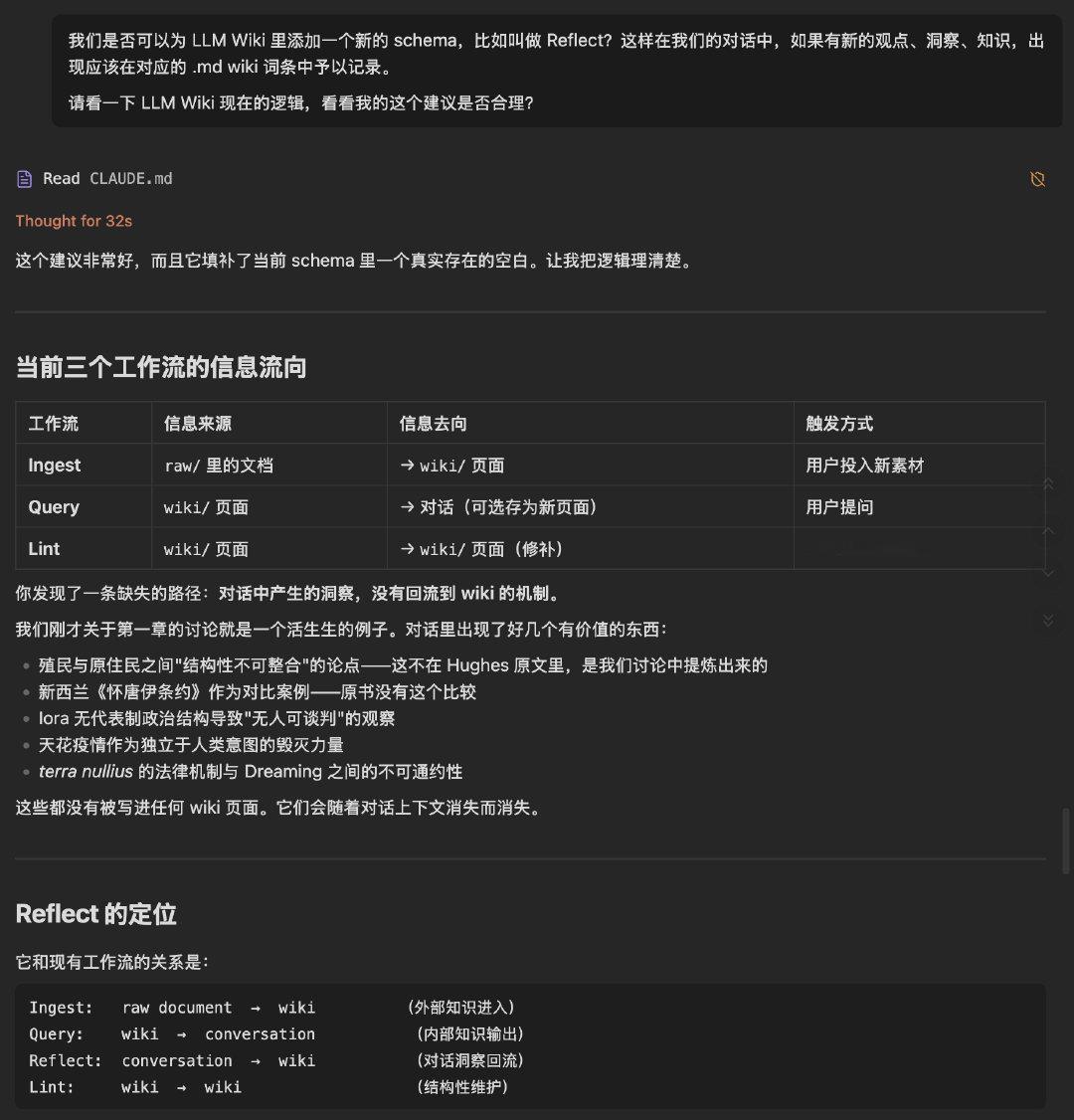
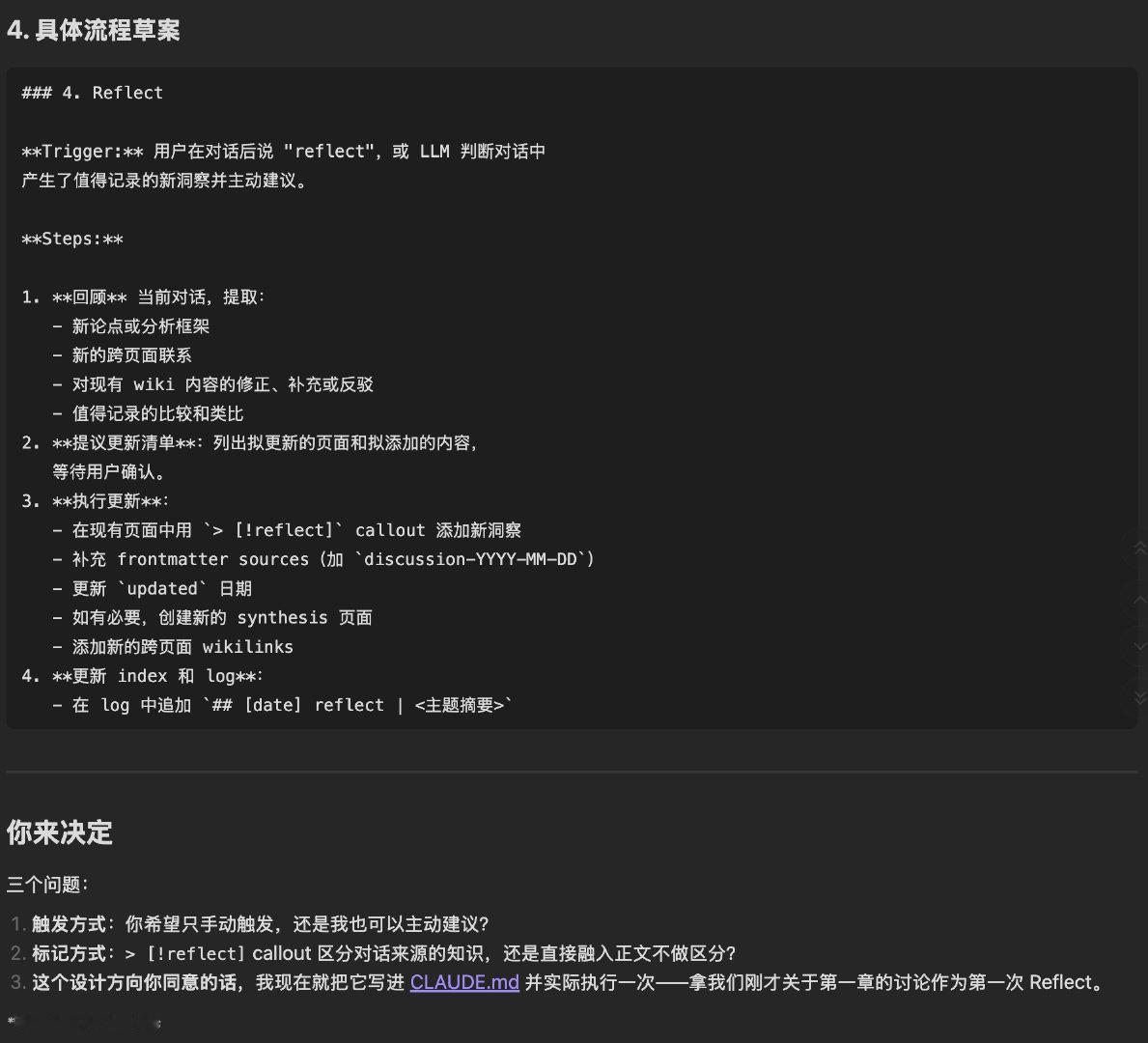
为 LLM Wiki 策略增加了一个新的 Reflect schema,和 Claude 的讨论过程供参考。在 CLAUDE.md 里新增的段落如下:
3. Reflect
**Trigger:** User says "reflect" after a conversation, or the LLM judges that the conversation has produced novel insights worth flowing back into the wiki and proactively suggests a Reflect. When suggesting, the LLM presents a proposed update list and waits for user confirmation before executing.
**What Reflect captures:**- New arguments, analytical frameworks, or interpretive angles that emerged from discussion- Cross-page connections that were not previously linked- Corrections, supplements, or counterpoints to existing wiki content- Comparisons, analogies, or contrasts drawn from outside the wiki's current sources- The user's own observations and judgments worth preserving
**Steps:**
1. **Review** the current conversation and extract insights that are not already recorded in the wiki.2. **Propose an update list**: for each insight, specify: - Which existing page(s) to update, or whether a new page is warranted - What content to add - Wait for user confirmation before proceeding.3. **Execute updates**: - On existing pages, add new insights inside a `> [!reflect]` callout to distinguish conversation-derived knowledge from source-derived knowledge. Include a date stamp in the callout title: `> [!reflect] 2026-04-14` - Append `discussion-YYYY-MM-DD` to the page's `sources` list in frontmatter - Update the `updated` field in frontmatter - If the discussion produced a sufficiently independent and valuable argument, create a new page with `type: synthesis` - Add new `[[wikilinks]]` wherever the discussion revealed connections between pages4. **Update `wiki/index.md`:** Add any new pages to the appropriate category tables.5. **Append to `wiki/log.md`:** Add a ` [date] reflect | ` entry listing all pages updated/created.
**Rules:**- Never fabricate insights that were not actually discussed. Reflect records what emerged from the conversation, not what the LLM thinks should have been discussed.- The `> [!reflect]` callout is sacred: it means "this came from a human-LLM discussion, not from a raw source." Do not use it for source-derived content.- When in doubt about whether an insight is significant enough to record, ask the user.- Reflect can be combined with Query: if a query conversation produces novel insights, the LLM may suggest a Reflect at the end.